

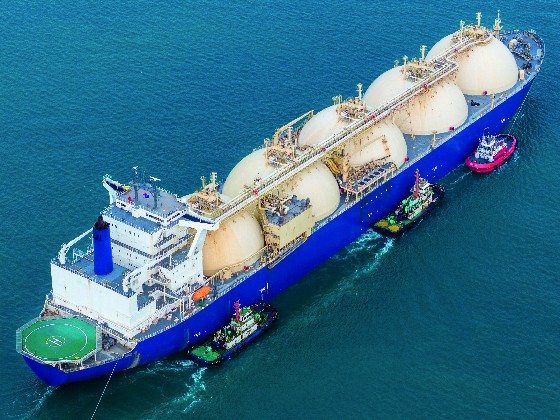
AIMS:
This course aims to provide officers and ratings intending to serve on board Liquefied Natural Gas (LNG) tankers with realistic, simulator-based training in LNG cargo and ballast operations. In accordance with the STCW Convention, Regulation V/1-2, paragraphs 1 and 2, seafarers must either have appropriate operational experience on LNG tankers or have completed approved specialised shore-based training. This course addresses that requirement by offering advanced simulation exercises replicating real-time LNG tanker operations.
This course meets the requirements laid down in Regulation I/12, Sections A-I/12, B-I/12, and Table A-V/1-2-2 of the STCW Convention and Code, as amended in 2010, and is in full compliance with IMO Model Course 1.36.
OBJECTIVES:
The primary objective of this course is to provide trainees with the knowledge, understanding, and proficiency (KUPs) necessary to demonstrate competence in LNG tanker cargo and ballast handling, as outlined in Table A-V/1-2-2 of the STCW Code, using an approved simulator.
Upon successful completion of the course, trainees will be able to:
- Demonstrate practical competence in cargo handling procedures on LNG tankers during both normal and emergency operations.
- Show enhanced awareness of:
- The importance of proper pre-planning,
- The use of checklists,
- The need to adhere to established timescales during various LNG cargo and ballast handling operations.
- Consistently apply safe and proper operational procedures in simulated LNG tanker environments.
- Identify and troubleshoot typical cargo and ballast-related operational problems, enhancing decision-making skills on board.
- Make sound and timely decisions that promote ship safety and the protection of the marine environment.
The course also aims to improve the Seafarers' ability to make effective contributions to:
- Safe shipboard operations,
- Environmental protection,
- Prevention of operational incidents during LNG cargo handling and ballasting.
COURSE CONTENT:
- Introduction and Familiarisation with LNG Cargoes
- LNG Operation Sequence Overview: Ballast Operations
- Post-Delivery (Yard/Dry-Dock) Pre-Departure Operations – Stripping and Gas
- Freeing
- Emergency Procedures, Response and Contingency Planning
- Safety Regulations and Standards
- Cargo Containment Systems
- Cargo Handling Equipment
- Cargo Transfer Operations
- Environmental Considerations
- Behavioural Competency Assessment
- SIRE 2.0 Familiarisation