

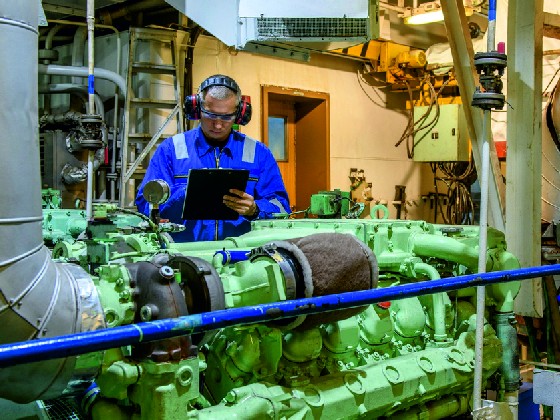
AIMS:
This course is designed to provide marine engineering officers and technical personnel with comprehensive knowledge and practical understanding of MAN B&W ME electronically controlled main propulsion engines, including their design features, operating principles, hydraulic and fuel systems, engine control systems, diagnostics, troubleshooting, and maintenance procedures required for safe, efficient, and reliable engine operation onboard ships.
OBJECTIVES:
By the end of this course, participants will be able to:
- Understand the operational concept and development of MAN B&W ME-C and ME-B electronically controlled engines.
- Explain the design features and major components of ME engines.
- Understand the construction and function of the hydraulic power supply system and associated filter units.
- Familiarise with the main operating panel, displays, and control interfaces.
- Explain the operation and function of the hydraulic cylinder unit.
- Understand the working principle, operation, and adjustment of the fuel oil pressure booster system.
- Describe the ME engine electronic control concept and automation architecture.
- Operate and interpret PMI (Performance Monitoring Indicator) and CoCoS EDS diagnostic systems.
- Understand engine control system logic and interaction between control components.
- Identify common faults and perform systematic troubleshooting.
- Understand maintenance and replacement procedures for MPC modules.
- Demonstrate safe operational practices related to ME engine control and monitoring systems.
COURSE CONTENT:
- Introduction to MAN B&W ME Engines
- ME Engine Design Features
- Hydraulic Power Supply System
- Hydraulic Cylinder Unit
- Fuel Oil Pressure Booster System
- Main Operating Panel and Engine Interface
- Engine Control System
- PMI and CoCoS EDS System
- Troubleshooting and Fault Diagnosis
- MPC Module Replacement and Maintenance
- ME-C Engine Operation and Control
AIMS:
- To provide marine engineers and electro-technical officers with the necessary knowledge and practical skills to safely operate, maintain, and troubleshoot marine high voltage (HV) systems.
- To ensure participants understand and comply with relevant safety procedures, risk assessments, and operational standards associated with HV installations onboard ships.
OBJECTIVES:
By the end of the course, participants will be able to:
- Identify components and configurations of marine high voltage systems.
- Apply HV safety procedures and isolation techniques.
- Operate HV switchgear and conduct fault diagnosis.
- Perform risk assessment and implement appropriate protective measures.
- Respond effectively to HV electrical emergencies and ensure regulatory compliance.
COURSE CONTENT:
- International requisites for high voltage knowledge Advantages of high voltage systems
- Hazards
- High voltage equipment on board High voltage safety rules
- Safe working procedures
- High voltage propulsion system
- Protective devices
- High voltage electrical equipment testing methods Transformer testing
- High voltage equipment maintenance.
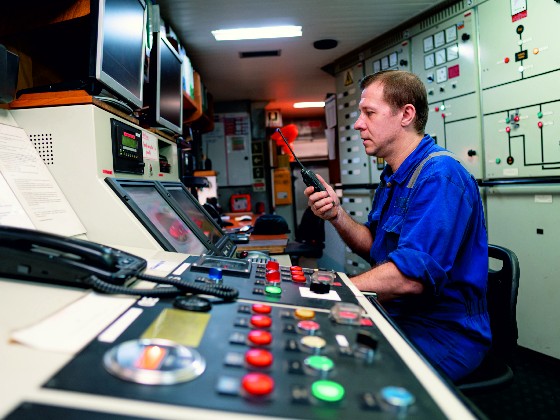
AIMS:
The Engine Room Simulator (Operational Level) course aims to equip participants with the knowledge, skills, and competence necessary to meet the requirements of Table A-III/1 of the STCW Convention. This training prepares officers in charge of an engineering watch to perform their duties efficiently and safely in both manned engine rooms and periodically unmanned engine rooms. The course emphasises practical application, situational awareness, and operational safety through realistic simulator-based scenarios.
Table A-III/1: Specification of minimum standard of competence for officers in charge of an engineering watch in a manned engine room or designated duty in a periodically unmanned engine room, and IMO Model Course 2.07
OBJECTIVES:
Upon successful completion of this course, participants will be able to:
- Maintain a Safe Engineering Watch
- Monitor and manage engine room operations, ensuring compliance with safety protocols and operational standards.
- Apply Engine Room Resource Management
- Demonstrate effective teamwork, communication, and decision-making skills to optimise resource utilisation and maintain operational efficiency.
- Operate Main and Auxiliary Machinery
- Manage the operation, monitoring, and troubleshooting of main propulsion systems and auxiliary machinery.
- Handle Fuel, Lubrication, Ballast, and Pumping Systems
- Operate and maintain fuel, lubrication, ballast, and other pumping systems, along with their associated controls, ensuring seamless operation.
- Operate Electrical, Electronic, and Control Systems
- Safely manage and troubleshoot electrical, electronic, and control systems integral to engine room operations.
COURSE CONTENT:
- Maintain a safe engineering watch
- Engine room resource management
- Operate main and auxiliary machinery and associated control systems
- Operate fuel, lubrication, ballast and other pumping systems and associated control systems
- Operate electrical, electronic and control systems
AIMS:
This course is designed to fulfil the requirements of Section A-I/12, paragraphs 6 and 7, of the STCW Convention, with a focus on engine room simulator training. The course ensures that participants develop and demonstrate competence in the operational, technical, and managerial aspects outlined in Tables A-III/2, through realistic simulation and comprehensive training modules.
OBJECTIVES:
- Manage Propulsion Machinery: Operate and maintain propulsion systems efficiently and safely.
- Plan Operations: Create effective schedules and workflows for engine room tasks.
- Ensure Machinery Safety: Monitor, assess, and maintain propulsion and auxiliary systems.
- Manage Fuel and Ballast: Oversee fuel, lubrication, and ballast operations per regulations.
- Operate Electrical Systems: Handle electrical and electronic control equipment effectively.
- Troubleshoot Systems: Identify and fix faults in electrical and control systems.
- Detect Malfunctions: Diagnose machinery issues and implement corrective actions.
- Team Management: Apply resource and teamwork principles for effective engine room operations.
- Simulation Training: Enhance safety and skills through realistic simulator exercises.
COURSE CONTENT:
- Manage the operation of propulsion plant machinery
- Plan and schedule operations
- Operation, surveillance, performance assessment and maintaining the safety of the propulsion plant and auxiliary machinery
- Manage fuel, lubrication and ballast operations
- Manage the operation of electrical and electronic control equipment
- Manage the troubleshooting and restoration of electrical and electronic control equipment to operating condition
- Detect and identify the cause of machinery malfunctions and correct faults
- Engine Room Resource and Team Management
AIMS:
- To provide marine engineers and electro-technical officers with the necessary knowledge and practical skills to safely operate, maintain, and troubleshoot marine high voltage (HV) systems.
- To ensure participants understand and comply with relevant safety procedures, risk assessments, and operational standards associated with HV installations onboard ships.
OBJECTIVES:
By the end of the course, participants will be able to:
- Identify components and configurations of marine high voltage systems.
- Apply HV safety procedures and isolation techniques.
- Operate HV switchgear and conduct fault diagnosis.
- Perform risk assessment and implement appropriate protective measures.
- Respond effectively to HV electrical emergencies and ensure regulatory compliance.
COURSE CONTENT:
- International requisites for high voltage knowledge Advantages of high voltage systems
- Hazards
- High voltage equipment on board High voltage safety rules
- Safe working procedures
- High voltage propulsion system
- Protective devices
- High voltage electrical equipment testing methods, Transformer testing
- High voltage equipment maintenance.
AIMS:
Engine Room Resource Management (ERM) was developed for marine engineers, electro-technical officers, technical superintendents, and shipboard personnel. It focuses on the efficient operation and supervision of propulsion and auxiliary systems in a team-based environment.
Emphasis is placed on resource management, leadership, and teamwork, essential for safe and effective engine room operations. The course aligns with IMO Model Course 2.07 and complies with SIRE 2.0 Part 1 – Section 3.3.4.
OBJECTIVES:
An Engine Room Team and Resource Management course is designed to equip maritime professionals, especially those in a ship's engine department, with the skills and knowledge to effectively manage personnel, machinery, and resources in the engine room. The goal is to enhance safety, operational efficiency, and teamwork within the engine room. Below is a general outline of the potential content covered in such a course.
COURSE CONTENT:
- Human factor theory and human limitations
- Monitor the operation of electrical, electronic, and control systems
- Operate generator and distribution system
- Manage the troubleshooting and restoration of electrical and electronic equipment to operating condition
- Efficient use of resources and delegation
- Communications
- Planning and prioritising
- Identification of the cause of the problem and a timely correct response
- Behavioural Competency Assessment
- SIRE 2.0 familiarisation
